
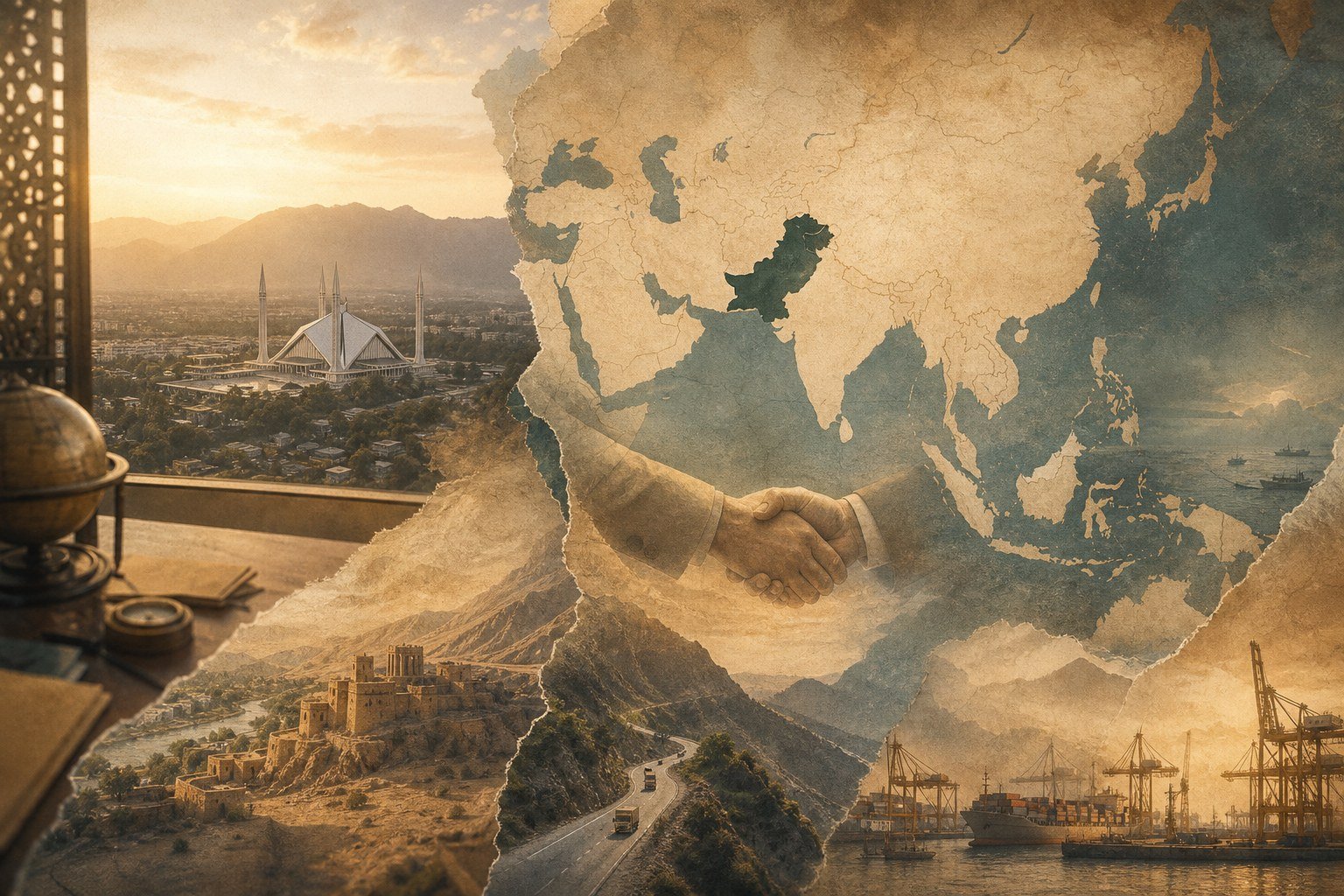
Asia Society Policy Institute has produced a wide-ranging, perceptive, forward-looking, and analytically rigorous report on Asian middle powers. Titled Seeking Agency in Uncertainty: Asian Middle Powers in the Fragmented World Order (April 2026), and co-authored by Farwa Aamer and Emma Chanlett-Avery, the study stands out for its conceptual clarity and empirical depth. The report is candid in acknowledging that the notion of “middle powers” is fuzzy and “imprecise,” yet persuasively defends it as a useful analytical tool, defining such states as those not considered great powers but endowed with considerable human capital, economic resources, and military capabilities. Within its Asia-Pacific focus, this definition is both functional and analytically coherent, anchored in these three variables.
The authors convincingly map the landscape by foregrounding Japan, South Korea, and Australia, while more importantly underscoring the growing salience of Indonesia and India within the evolving constellation of middle powers. The report correctly projects Japan as steadfast US ally in the Asia Pacific and a potential arms supplier along with South Korea as an important alternate weapons supplier to the Middle East and global south. While, India a strong middle power aspirant, which was keen to strengthen strategic partnership with the US as potential arms supplier and technology collaborator, however, the Trump administration has found Indian position discomforting on the Ukraine war, Gaza crisis, and ongoing Middle East war, resultantly, these relations have been jolted. For arms supplies, now India is hedging towards France, carefully treading between the US and China. Indonesia, as the watchdog of Malacca Strait is of critical importance and is crafty in maintaining relations with both the US and China and is well placed as a middle power. Thus, most South East Asian countries continue to strengthen economic partnerships with China but for security and strategic needs continue to prefer relying on the US. Despite, Trump administration’s increasing impulsiveness in global relations. Given this snapshot review, the report’s analytical strength lies in its clear visualizations and incisive configurations, situating these states within multilateral frameworks such as G7, G20, BRICS, and Quad, while also tracing how they cultivate and expand economic, security, and strategic linkages (see figures 1 & 2).
Pakistan, the Gulf, and the Middle East are treated as an outlier appendix, yet the report rightly recognizes Pakistan’s central and pivotal role as a state that has skillfully balanced credible relations between the United States and China, notwithstanding the recurrent volatility in United States–Pakistan ties. In my view, these relations remain enduring, if strained; anchored in elite networks, strategic calculations, and institutional memory, and continue to keep windows of opportunity open for Pakistan across the Middle East, South Asia, and Central Asia.
Paradoxically, this section is among the most illuminating. By identifying the current Middle East crisis as a “turning point,” the report sharpens its central claim: middle powers must prepare for systemic shocks, diversify energy and security strategies, and act with prudence and pragmatism in alliance formation. It forcefully argues that as the traditional order fragments and American primacy erodes, the emerging world order will not be shaped by Washington and Beijing alone; rather, middle powers now have a tangible opportunity to “convert hedging into durable architecture.”
Task Ahead, Pakistan
Pakistan’s leadership, establishment, and foreign office merit recognition for their mediatory and peace-building role in the ongoing U.S.–Israel–Iran conflict. Yet strategic opportunity alone is insufficient. Pakistan’s compact geography and pivotal location offer clear advantages, but sustaining and consolidating middle power status demands structural economic reform, investment in human capital, improvements in the security environment, strengthened governance capacity, better management of federation–province relations, and a sharper focus on citizen welfare. Is Pakistan ready to seize and convert this strategic opportunity into achievable reality?
Discussion
Join the conversation. Comments are powered by GitHub Discussions.